In Maranhão, northeastern Brazil, communities defending their ancestral lands are facing increasing intimidation and violence.
Illegal land grabbers invade their lands and fuel division and violence. Communities report drones being used to surveil their territories and to dump pesticides over crops – poisoning the soil, damaging livelihoods, and creating health crises.
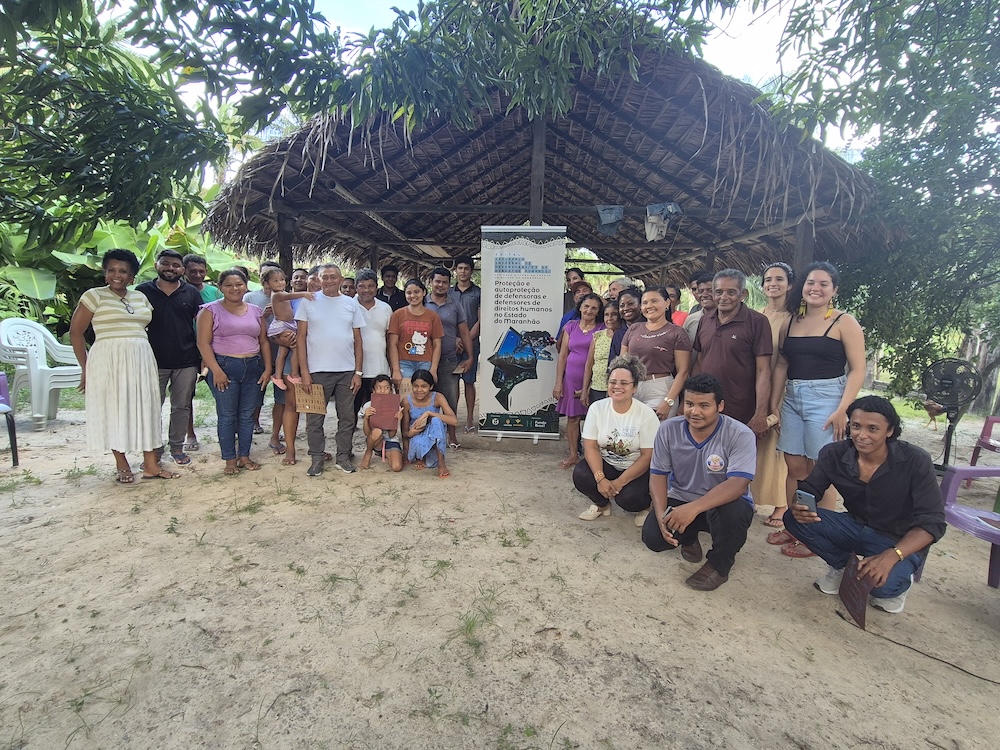
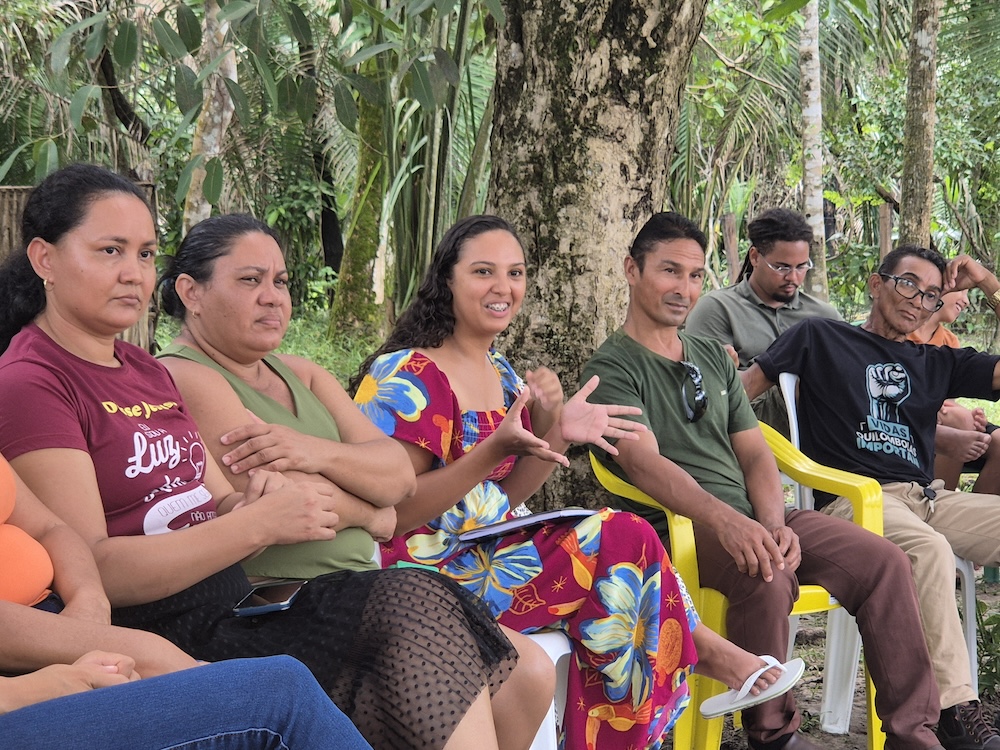
Against this backdrop, Open Briefing worked with quilombola communities in Maranhão over three days in April 2026 to strengthen protection and security capacity among defenders working to protect their land, livelihoods, and way of life. Complementing a broader Fundo Brasil-funded project, we delivered three in-person holistic security workshops designed to strengthen the safety capacities of community members and support them to build collective, community-based protection strategies in response to ongoing threats against local defenders.
The workshops took place across rural communities in Maranhão, in a region on the border of the legal Amazon and in the transition zone between the Amazon rainforest and the Cerrado savanna – a hotspot for agribusiness expansion, land disputes, deforestation, and mineral exploitation.
Quilombola communities are Afro-Brazilian communities formed by descendants of formerly enslaved Africans who established autonomous settlements and maintain deep cultural, social, and territorial ties to their land. Many have lived in and protected these territories for generations. Today, they increasingly face threats and violence for defending their land, communities, and way of life.
As Carla Vitória, Open Briefing’s response coordinator, explained, communities are facing “different layers of crisis” that threaten their safety, land, and way of life. “Drones throwing pesticides at their crops are a clear example of technology being used to facilitate violence against these communities,” said Carla. Communities also described drones being used to monitor territories and disrupt agricultural activity, causing further environmental harm.
A women-led movement defending land and rights
These workshops were delivered in partnership with the Comitê de Defesa dos Direitos dos Povos Quilombolas de Santa Rita e Itapecuru Mirim, Maranhão (Committee for the Defence of the Rights of Quilombola Peoples of Santa Rita and Itapecuru Mirim, Maranhão) – a grassroots movement founded in 2018 and made up primarily of women.
The committee was established to discuss and defend the rights of quilombola communities facing the impacts of the expansion of BR-135, the federal highway connecting Maranhão’s capital city, São Luís, to other regions of Brazil. The road expansion moved forward without any meaningful consultation with affected communities, including in areas where the highway cut directly through quilombola territories. Since then, the committee has played a vital role in legal advocacy, documenting human rights violations, developing consultation protocols, advocating for access to healthcare, vaccines, and public services, and defending leaders facing threats.
“Our role is to facilitate the answers that already exist within the community”
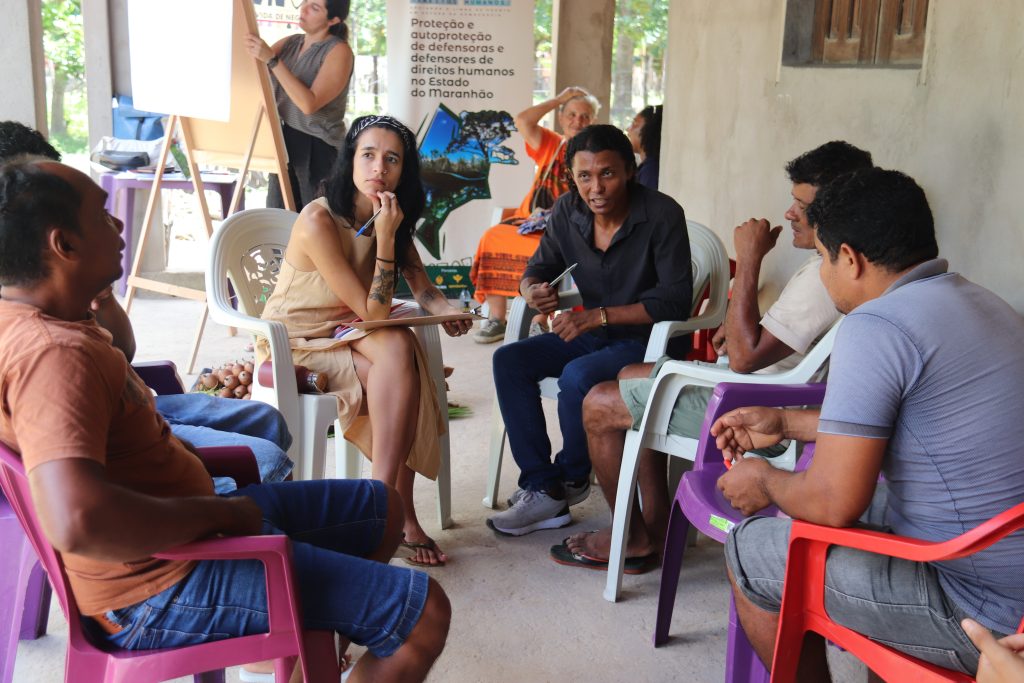
Across the workshops, Open Briefing’s safety and security team facilitated conversations and practical exercises around security, collective protection, and strategies to safeguard communities and their work.
Rather than arriving with prescriptive solutions, the team focused on helping communities strengthen, organise, and amplify the protection strategies they already use.
“We do not position ourselves as external experts, but as facilitators,” said Carla. “Our role is to help facilitate the answers that already exist within the community, while sharing some of the lessons we have learned alongside defenders in other contexts.”
Participants worked together to map threats, identify perpetrators and allies, strengthen monitoring and reporting systems, and build practical, community-based protection strategies.
The workshops also included a light-touch digital and information security component, a tailored digital security guide developed with support from Open Briefing’s digital and information security team. The guide addresses some of the key threats communities are facing and has been designed to be practical and accessible, including for community members with minimal access to technology and low literacy levels.
Why in-person support matters
Being in the communities themselves was critical to the success of these activities.
It allowed our team to build trust, better understand local dynamics, and create space for more people to participate – not only formal leaders, but also other members of the community.
“There are some reports of threats and other risks that you can only access in person through building trust eye-to-eye,” said Carla.
By sharing experiences collectively, participants were able to better understand patterns of harm, build a shared sense of risk and urgency, and begin developing stronger collective protection strategies.
The workshops were facilitated by two of our Brazilian team members with strong contextual knowledge and cultural familiarity, allowing discussions to be conducted naturally in Brazilian Portuguese and grounded in locally relevant realities, references, and community dynamics.
Activities were also designed using grassroots education approaches to ensure participation across a highly diverse group of community members.
The collective also arranged for a specialist in collective care to be present, supporting activities involving the body, traditional practices, and relationships with nature, helping make the workshops more tangible and grounded in participants’ realities. This mirrors the approach we are building in our own wellbeing work.
Security is a collective endeavour
The workshops led to immediate practical outcomes. Through exercises and collective discussions, participants began building ongoing systems for monitoring threats, registering incidents, mapping allies, and identifying the actors driving harm in their territories.
“Security itself became a collective endeavour,” reflected Carla.
Rather than focusing only on the most visible leaders, the workshops encouraged communities to see protection as a shared responsibility, strengthening social ties, collective resilience, and reducing isolation.
The practical exercises helped communities build what Carla described as “mechanisms of resistance” – strengthening their ability to assess threats more objectively and respond together.
Flexible funding enables long-term protection
The threats facing quilombola communities in Maranhão reflect wider patterns facing Indigenous, land, and environmental defenders across the globe.
This work builds on Open Briefing’s growing partnerships in Brazil, including our support for Indigenous and grassroots defenders at COP do Povo in Belém last year.
It also demonstrates the importance of flexible, trust-based funding in enabling tailored, in-person support in complex and evolving contexts.
The workshops also helped strengthen Open Briefing’s own approach in communities, offering important learning that can inform future support for environmental defenders in other regions.
With support from our incredible community of funders, we can continue strengthening the safety, resilience, and collective protection of environmental and human rights defenders on the frontlines of social and environmental justice around the world.
This work also opens opportunities for future collaboration with grassroots leaders and communicators to amplify community voices and stories.
In Maranhão, communities are defending more than territory. They are defending culture, history, food systems, and futures. By strengthening collective protection and investing in locally led resilience, we can help ensure they continue that work safely.
Access further support and get involved
Open Briefing provides fully-funded assistance to activists and organisations facing threats related to their work. You can request support through our responsive assistance mechanism.
If you’re a foundation or philanthropist who believes in protecting the people who defend human rights and our environment, we’d love to hear from you. Contact our director of development, Vicky Nida, at victoria.nida@openbriefing.org to discuss how you can join our incredible community of donors or read more about how Open Briefing works with foundations to strengthen civil society in our latest blog.